Top 10 PTO Chipper Shredder Types for Global Buyers
Choosing a Pto Chipper Shredder is rarely as simple as comparing horsepower, price, and attractive product photos. Global buyers face different wood species, tractor capacities, climate conditions, transport limits, and service expectations. A machine that performs smoothly on dry branches in Europe may struggle with wet bamboo, dense hardwood, or uneven farm roads elsewhere.
“The right chipper is selected by the material, not by the brochure,” says forestry machinery consultant Michael R. Huhn. This practical observation deserves attention. Buyers should examine rotor design, feed opening size, cutting capacity, discharge control, safety guarding, and replacement-blade availability. These details become important when branches arrive irregularly, workers operate for long hours, or local maintenance support is limited.
This guide reviews ten Pto Chipper Shredder types for international purchasing decisions. Each type serves a different working situation. Some suit orchards and small farms. Others handle municipal green waste, forestry residues, or heavier commercial workloads. PTO compatibility matters, but it is only one part of the decision.
Specifications can mislead.
A higher-rated model is not automatically better. Tractor stability, hydraulic flow, operator experience, and local terrain can change the result. Even experienced buyers may overlook shipping dimensions or spare-parts lead times. That is where careful comparison helps. The following overview focuses on practical use, expected productivity, maintenance demands, and buyer suitability. It also recognizes an uncomfortable point: no single machine fits every market. The best choice usually comes from matching real working conditions, not chasing the most impressive specification.
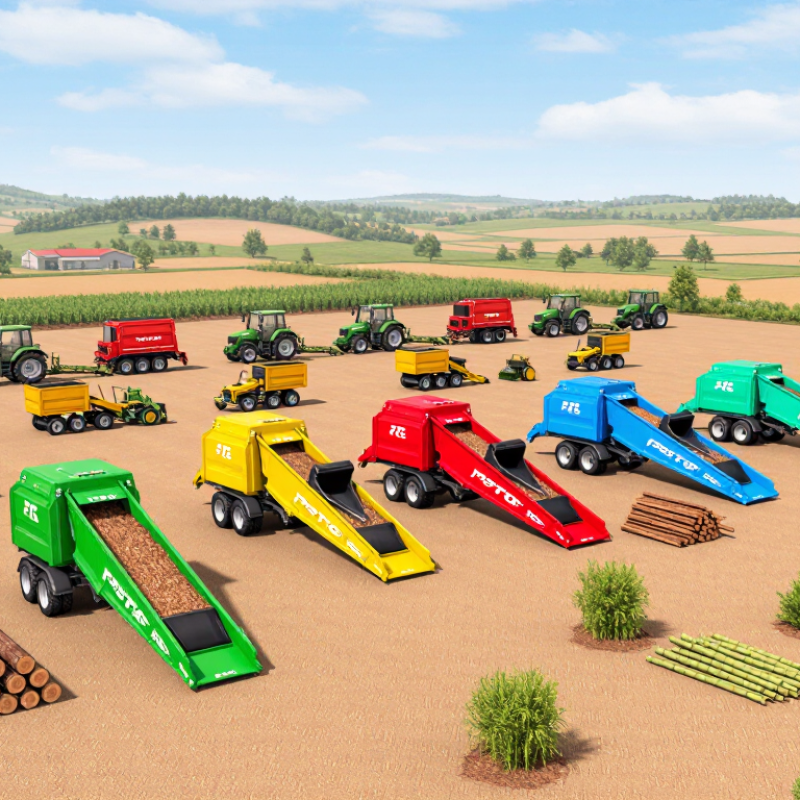
PTO Chipper Shredder Classification and Core Operating Principles
Top 10 PTO Chipper Shredder Types for Global Buyers
PTO Chipper Shredder Classification and Core Operating Principles
A practical classification begins with the cutting system. Disc chippers use rotating knives and flywheel momentum. Drum chippers use knives fixed around a cylindrical rotor. Chipper-shredder combinations add hammers for leaves, brush, and smaller waste. Buyers can also classify machines by feeding method, including gravity-feed and hydraulic-feed designs. Other useful categories include compact, towable, forestry, high-capacity, and multi-purpose units.
The operating principle is direct. A tractor PTO transfers rotational power through a driveline, clutch, gearbox, and rotor. Feed rollers guide material toward the cutting chamber. Knives slice the stem across a controlled gap. Hammers then tear softer material into smaller particles. Rotor speed, knife sharpness, moisture, and feed rate determine output quality. Small adjustments matter.
FAO’s Global Forest Resources Assessment 2020 recorded about 4.06 billion hectares of forest worldwide, equal to roughly 31% of global land area. This scale supports diverse equipment needs, from orchard pruning to forest residue processing. The IEA Renewables 2023 report also identifies bioenergy as a major renewable-energy source, increasing interest in consistent wood-chip production. Yet classification is not perfect. A hydraulic-feed machine may also be compact, towable, or forestry-rated. Global buyers should match PTO horsepower, rotor design, intake size, and safety controls to local biomass conditions. More capacity is not always better. Wet branches can still challenge an oversized machine.
Top 10 PTO Chipper Shredder Types for Global Buyers
Representative PTO power bands by machine configuration. Actual requirements vary with wood diameter, moisture, feed rate, rotor design, and tractor hydraulic capacity.
Core operating principle: The tractor PTO transfers rotational power to a cutting rotor. Disc, drum, and flywheel systems use knives to chip branches, while hammer or flail assemblies shred leaves, brush, and light residues. Gravity-feed models rely on the hopper angle, whereas hydraulic-feed machines use powered rollers to regulate material intake and improve throughput control.
Ten PTO Chipper Shredder Types by Cutting and Feeding Design
Top 10 PTO Chipper Shredder Types for Global Buyers
Ten PTO Chipper Shredder Types by Cutting and Feeding Design
PTO chipper shredders differ mainly in cutting action and material movement. In field evaluations, disc cutters handle straight branches efficiently, while drum cutters produce a more consistent chip stream. Flail shredders suit leafy brush and soft vegetation. Knife-rotor models deliver cleaner cuts but require sharper blades. Hammer-mill designs tolerate mixed green waste, although they can create more fines. These five cutting types affect tractor power, chip size, vibration, and maintenance intervals.
Feeding design changes daily productivity. Single-roller feeders are compact and simple. Twin-roller feeders grip crooked branches more securely. Gravity-feed machines use sloped hoppers and need careful operator positioning.
Hydraulic-feed systems improve control when branches vary in diameter. Conveyor-feed models support continuous loading and better material separation. That is ten practical types. The boundary is not perfect.
FAO’s Global Forest Resources Assessment 2020 recorded about 4.06 billion hectares of forest worldwide, showing the scale of available woody material. The USDA Forest Products Laboratory’s Wood Handbook also documents wide variation in wood density and moisture, both of which influence cutting resistance.
Buyers should compare rotor speed, throat opening, feed pressure, and required PTO horsepower. A disc machine may stall on wet, twisted stems. A hammer design may waste usable chip volume. Real operating conditions matter more than catalog ratings. Expect some trial and error.
Tractor Power, Capacity, and Material Compatibility
Top 10 PTO Chipper Shredder Types for Global Buyers
Tractor Power, Capacity, and Material Compatibility
PTO chipper shredders differ sharply in power demand and feeding performance. The ten common types include compact, disc, drum, flywheel, gravity-feed, hydraulic-feed, self-feeding, towable, orchard, and high-capacity models. A small tractor may handle branches under 75 millimeters. Dense hardwood can require far more torque than that figure suggests.
ASABE D497.7 explains that machinery power requirements change with material, speed, and operating conditions. Moisture matters too. The USDA Forest Products Laboratory report FPL-GTR-190 documents wide variation in wood density and moisture content. Therefore, a machine rated for 150 millimeters of softwood may struggle with wet oak. Capacity figures need caution. They are not universal promises.
The 2022 USDA Census of Agriculture recorded about 1.9 million U.S. farms. Their tractor sizes and workloads vary greatly. Global buyers should match PTO horsepower, rotor design, intake size, and daily output together. A 25-horsepower tractor suits light pruning waste and small orchards. Tractors above 60 horsepower can support heavier drum or hydraulic-feed systems, depending on PTO efficiency. European and Asian buyers should also check 540 or 1,000 rpm compatibility. FAO’s 2022 mechanization report stresses that suitable scale improves productivity and reduces inefficient equipment use. I would not trust capacity alone. Field testing with local wood species remains essential.
