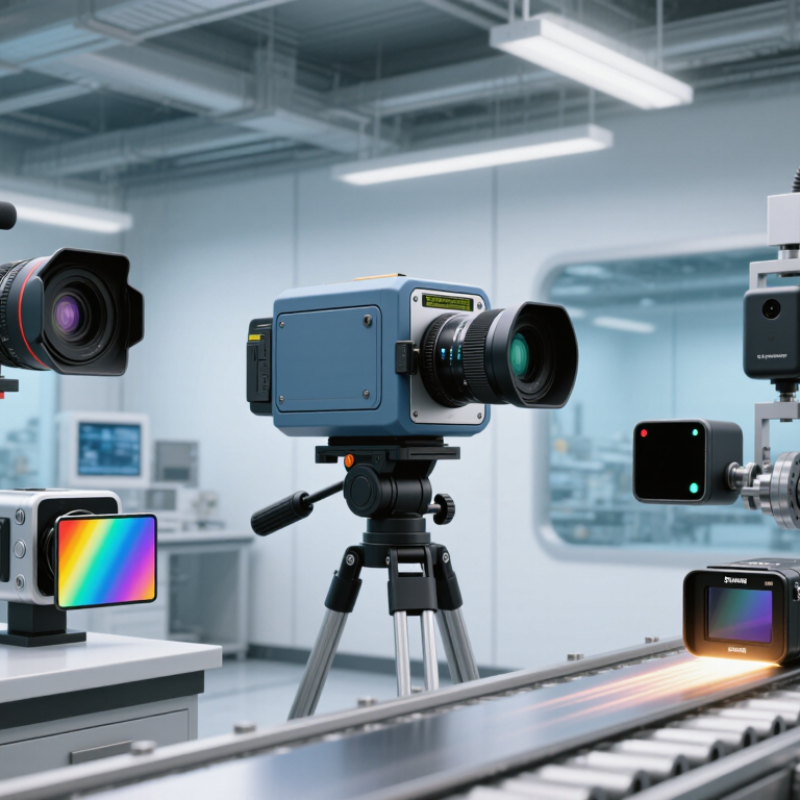
| Standard CMOS High-Speed Camera | 1,000–10,000 fps | 1–4 megapixels, depending on frame rate | Global shutter is common | Approximately 1 µs to 1 ms | Internal high-speed memory; Gigabit Ethernet, 10GbE, CoaXPress, or similar output on selected systems | Assembly-line inspection, robotics, material testing, drop tests, and general motion analysis | Balanced combination of frame rate, image quality, triggering, and system cost |
| Ultra-High-Speed CMOS Camera | 10,000–100,000+ fps | Typically 256 × 256 to 1,024 × 1,024 pixels at the highest speeds | Global shutter or specialized high-speed sensor readout | Approximately 0.1–100 µs | Large internal memory with later data download; external trigger and synchronization inputs | High-speed impact testing, combustion studies, fracture analysis, fluid jets, and explosive-event research | Captures events that occur too quickly for conventional industrial cameras |
| High-Resolution High-Speed Camera | 1,000–5,000 fps | 4–12 megapixels at reduced or moderate frame rates | Global shutter preferred for moving targets | Approximately 2 µs to 1 ms | High-bandwidth recording system, PCIe, CoaXPress, or onboard memory | Dimensional analysis, large-part testing, aerospace structures, tire testing, and detailed deformation measurement | Preserves more spatial detail while still recording fast motion |
| Compact Embedded High-Speed Camera | 1,000–20,000 fps | Approximately 0.3–2 megapixels | Global shutter CMOS | Approximately 1–500 µs | Gigabit Ethernet, USB 3.x, MIPI, or onboard storage, depending on the embedded design | Robot-mounted inspection, restricted installation spaces, laboratory automation, and machine troubleshooting | Small size, lower power consumption, and easier integration into existing equipment |
| High-Speed Machine-Vision Camera | 1,000–3,000 fps | Approximately 1–5 megapixels | Global shutter CMOS | Approximately 5 µs to 1 ms | CoaXPress, Camera Link, or 10GigE for continuous transfer to an industrial computer | Quality control, print and packaging inspection, conveyor monitoring, and fast pick-and-place systems | Supports repeatable triggering, deterministic timing, and automated pass/fail decisions |
| Intensified High-Speed Camera | 1,000–100,000+ fps | Commonly 0.1–2 megapixels | Global shutter with an image intensifier or gated optical stage | Approximately 1 ns to 1 ms | Internal memory, synchronized trigger input, and specialized high-speed data output | Low-light combustion, plasma research, laser processing, spark-gap observation, and transient optical events | Improves sensitivity and permits extremely short exposure times in low-light conditions |
| High-Speed Stereo or Multi-Camera System | 1,000–10,000 fps per camera | Approximately 1–4 megapixels per camera | Global shutter with hardware synchronization | Approximately 1–500 µs | Shared timing controller, synchronized recording memory, and 3D measurement software | Three-dimensional deformation, crash testing, biomechanics, robotic motion, and complex part dynamics | Combines high-speed recording with synchronized multi-angle or stereoscopic measurement |