Top 10 Innovations Shaping the Future of the Engineering Industry?
The engineering industry stands on the brink of transformation, driven by innovation and technology. Experts like Dr. Emily Carter, a renowned engineer, noted, "Embracing innovation is essential for the engineering sector's growth." This sentiment encapsulates the urgent need for the industry to adapt and evolve.
As we explore the top innovations shaping the future, it's clear that advancement is not without challenges. New technologies come with risks and ethical dilemmas that the engineering industry must navigate. For instance, automation can enhance efficiency but may also lead to job displacement.
Moreover, sustainability is a pressing concern. Innovations like green materials and energy-efficient designs are promising, yet their practical implementation often encounters resistance. The engineering industry must not only innovate but also reflect on these complexities. By doing so, it can better prepare for a future that balances progress with responsibility.
Emerging Technologies Transforming Engineering Practices
Emerging technologies are profoundly transforming engineering practices. One such innovation is artificial intelligence, which allows for smarter design processes. Engineers can analyze data faster, thus improving decision-making. Using AI, tasks like predictive maintenance become more efficient, yet reliance on algorithms poses risks. There’s still a need to question their accuracy and potential bias.
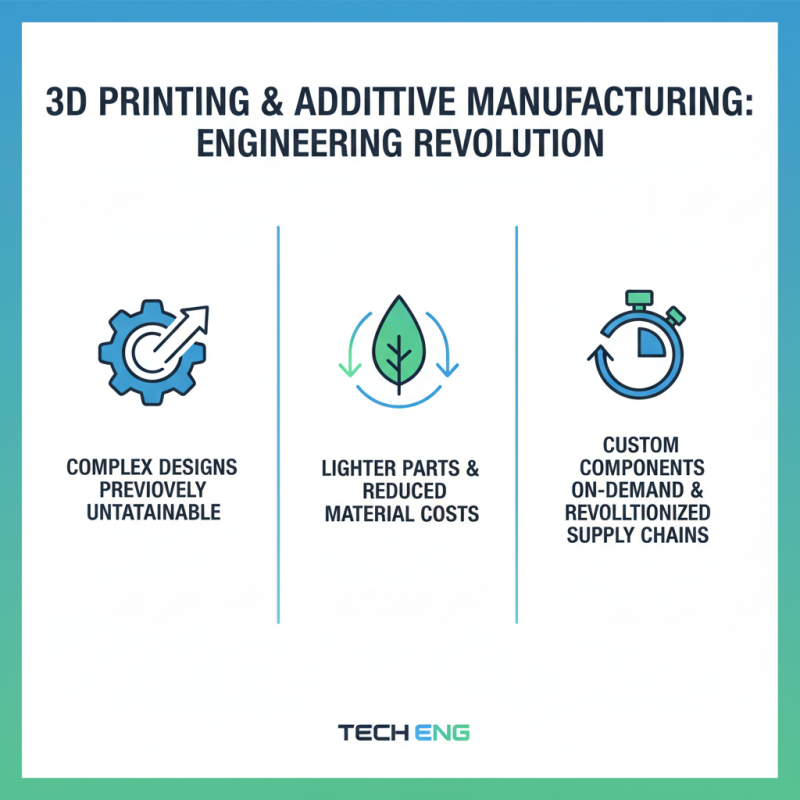
Another significant shift comes from 3D printing. This technology enables rapid prototyping and custom production of components. Engineers can create complex structures that were previously impossible. However, the material limitations and long-term durability of printed items can complicate their use. Investigating these shortcomings is crucial for wider adoption.
Additionally, the Internet of Things (IoT) is reshaping project management. Sensor technology provides real-time feedback during construction. This enhances safety and efficiency, yet issues arise with data security. Protecting information should be a priority. These emerging technologies present opportunities, but they also require careful consideration and reflection. The future of engineering will depend on striking a balance between innovation and caution.
Integration of Artificial Intelligence in Engineering Solutions
The integration of artificial intelligence (AI) is revolutionizing the engineering industry. AI algorithms can analyze vast amounts of data quickly. This allows engineers to make better decisions. However, not all AI implementations are perfect. There are challenges in data quality and system reliability.
AI can optimize design processes significantly. Engineers can create simulations to test concepts rapidly. Yet, the reliance on AI can lead to oversight. Human intuition and creativity still play crucial roles. A balance must be found between machine efficiency and human insight.
Predictive maintenance is another strong area for AI in engineering. Systems can predict failures before they occur. This can save time and costs. But, there's a risk of overconfidence in AI predictions. Engineers should remain vigilant and verify AI recommendations. Adapting to this changing landscape requires ongoing education and training. Embracing AI fully means acknowledging its limitations too.
Sustainable Engineering Innovations for Climate Change Mitigation
Sustainable engineering innovations are essential for combating climate change. They focus on reducing carbon footprints and enhancing energy efficiency. One approach is green building design. These structures use renewable materials and harness solar energy. They not only lower energy costs but also promote healthier living environments.
Tips for sustainable projects: Assess local materials for building. This reduces transportation emissions. Also, involve communities in projects. Their insights can lead to better designs.
Another exciting area is wastewater treatment technologies. Advanced methods recycle water for reuse. They minimize water waste and lessen the impact on natural resources. New filtration systems can purify water efficiently, but implementation can be costly and complex.
Continuous monitoring is essential to evaluate these technologies. Regular assessments help identify failures early. Collaboration among engineers, environmentalists, and local authorities can improve outcomes. This teamwork often exposes flaws in the initial designs. So it leads to better innovations over time.
The Role of Robotics and Automation in Modern Engineering Projects
Robotics and automation are revolutionizing the engineering industry. By 2025, it is projected that 85 million jobs will be displaced. However, 97 million new roles could emerge, emphasizing the need for adaptation. In many projects, robotic systems are not just tools; they are integral team members. These systems can complete repetitive tasks quickly and accurately, increasing efficiency.
Advanced technologies like AI and machine learning enhance robotics' capabilities. Data shows that companies adopting automation experience up to 30% productivity improvement. This shift allows engineers to focus on complex problem-solving rather than mundane tasks. The construction sector, for instance, has seen robots assist in dangerous environments, significantly reducing accidents.
**Tip:** Embrace continuous learning. Staying updated with emerging technologies is essential. Engineers must adapt to new tools and methodologies. **Tip:** Collaborate with AI. Working alongside these systems can lead to innovative solutions. Engaging in teams that include robotics can foster creativity and new project ideas. Reflecting on these elements is crucial. What challenges remain in integrating these technologies?
Top 10 Innovations Shaping the Future of the Engineering Industry
| Innovation |
Description |
Impact Area |
Implementation Year |
| Robotic Process Automation (RPA) |
Automation of repetitive tasks using software robots. |
Operational Efficiency |
2018 |
| 3D Printing |
Additive manufacturing technology for creating parts. |
Construction and Prototyping |
2019 |
| Artificial Intelligence (AI) |
Machine learning and data analysis for decision-making. |
Design and Analysis |
2020 |
| Drones |
Unmanned aerial vehicles for surveying and inspections. |
Site Monitoring |
2017 |
| Virtual Reality (VR) |
Immersive simulations for design visualization. |
Training and Design |
2018 |
| Building Information Modeling (BIM) |
Digital representation of physical and functional characteristics. |
Project Management |
2016 |
| IoT (Internet of Things) |
Connectivity of devices for data collection and monitoring. |
Smart Infrastructure |
2021 |
| Augmented Reality (AR) |
Overlaying digital information onto the real world. |
Maintenance and Training |
2019 |
| Digital Twins |
Virtual model of a physical object for monitoring and analysis. |
Performance Optimization |
2021 |
| Advanced Materials |
Innovative materials for enhanced performance and durability. |
Construction and Manufacturing |
2022 |