How to Choose the Right Plastic Mold for Your Needs?
Choosing the right plastic mold is crucial for any manufacturing process. The global plastic molding industry is projected to reach $700 billion by 2027, according to a recent market analysis. Understanding the specifications and requirements for your project can significantly impact your production efficiency and cost.
Plastic molds play a vital role in ensuring quality output. A well-chosen mold reduces waste and enhances product durability. For instance, the right mold can minimize cycle times by 30%. However, not all molds are created equal. Factors such as material type, mold design, and intended lifespan must be considered. A misstep at this stage can lead to costly rework or product failures.
Moreover, the landscape of plastic molding continuously evolves. Advancements in technology present new opportunities but also challenges. Selecting a mold requires a balance of expertise and foresight. An ideal mold caters to your specific needs while remaining adaptable to future demands. Reflecting on these aspects helps in making informed choices that align with industry standards.
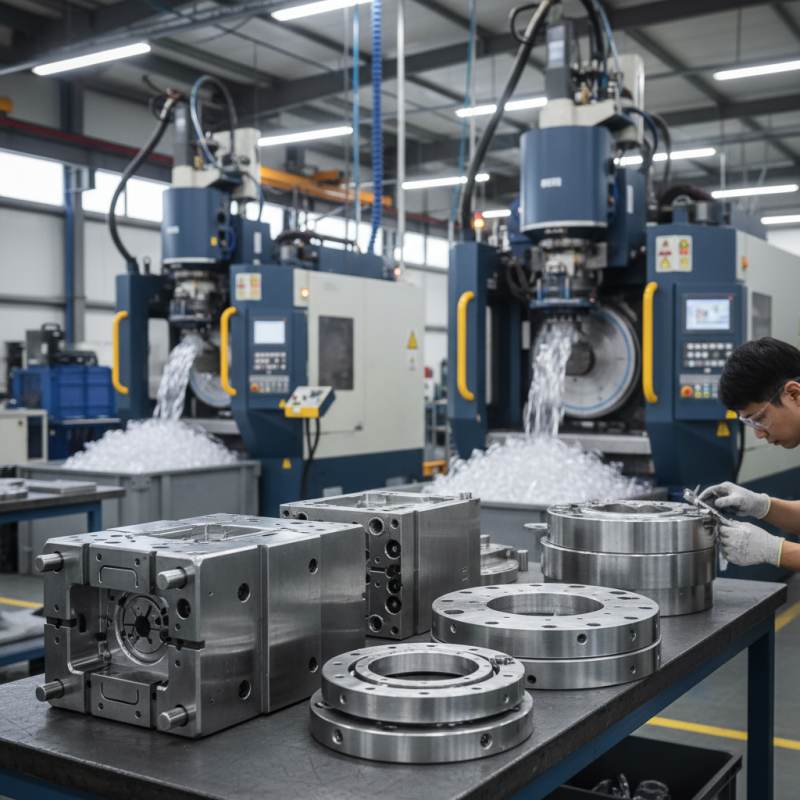
Understanding the Different Types of Plastic Molds Available in the Market
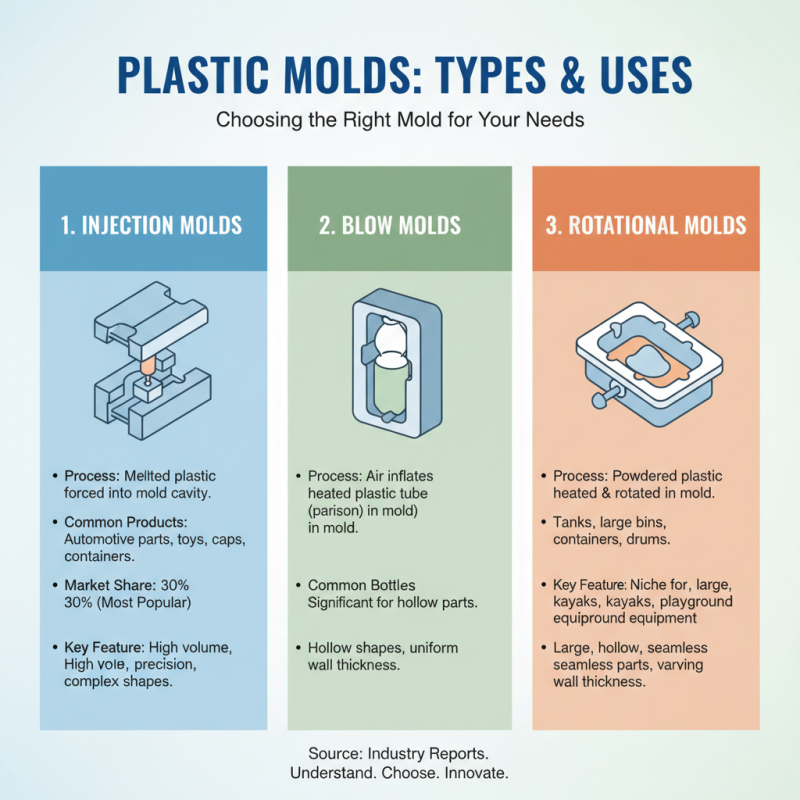
Choosing the right plastic mold requires a clear understanding of the types available. Injection molds, blow molds, and rotational molds are the three primary categories. Each serves different purposes. According to industry reports, injection molding accounts for 30% of the overall plastic processing market, highlighting its popularity and efficiency.
Injection molds are ideal for mass production. They enable complex designs and high precision. Blow molds are used mainly for hollow plastic products, such as bottles. Rotational molds, while less common, allow for larger items with uniform wall thickness. Each type has distinct advantages, but not everyone knows the trade-offs involved. For instance, injection molds can be expensive but offer faster production rates.
Tip: Assess your product's requirements before choosing a mold type. Understand your production volume to avoid overspending. If low volume is needed, consider blow or rotational molds.
When selecting molds, consider material compatibility. Some plastics cannot withstand certain mold types, leading to defects. Consulting a mold expert can offer clarity on these issues. Mistakes in choosing molds can be costly. It's crucial to weigh your options carefully.
Key Factors to Consider When Selecting a Plastic Mold for Production
Choosing the right plastic mold is crucial for successful production. Key factors include
material compatibility, mold design, and production volume.
According to industry reports, 70% of defects in molded products stem from poor mold selection. Understanding the specific needs of your product is vital.
Material compatibility affects durability and finish. For example, not all plastics work well with every mold type.
ABS may require a different mold than polypropylene. Know the thermal properties and flow characteristics of your materials.
A mismatch can lead to inefficiencies and wasted resources.
Mold design, on the other hand, impacts the ease of production.
Complex designs may increase costs and time.
A report from the Society of Plastics Engineers states that 40% of production delays come from mold design issues.
Consider the balance between design complexity and functionality. Reflections on past projects can help you identify potential pitfalls in the selection process.
Material Selection: How It Affects Mold Performance and Durability
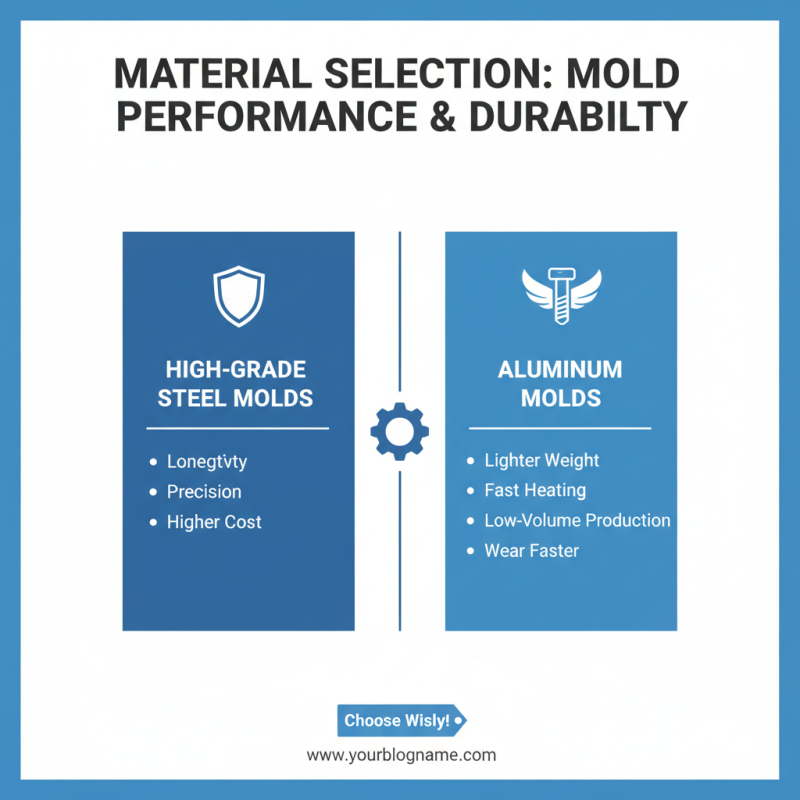
Material selection is crucial when choosing a plastic mold. Different materials offer varying properties that impact mold performance and durability. For example, high-grade steel molds often provide longevity and precision. However, they can be more expensive. Aluminum molds, on the other hand, are lighter and heat up quickly. They are ideal for low-volume production but may wear out faster.
Understanding the intended use of the mold is vital. For products requiring intricate designs or high levels of detail, durable materials are a must. On the flip side, for simpler shapes, a less expensive material may suffice. Manufacturers sometimes overlook the environmental impact of materials. Some options are more sustainable than others, which could influence public perception and acceptance of the product. Finding a balance between cost, performance, and ecological footprint is often challenging.
It's essential to consider the processing methods as well. Some materials handle injection molding better than others. Molding temperatures and cooling rates can also affect the final product's quality. A mismatch can lead to defects and rework. Decisions in material selection should therefore involve thoughtful analysis and expert consultation. Embracing flexibility in choosing materials could lead to surprising improvements in the overall outcome.
Cost Analysis: Evaluating the Economic Impact of Different Mold Choices
Choosing the right plastic mold involves more than just material selection. Cost considerations play a pivotal role in this decision-making process. Different mold materials have distinct price tags, impacting your overall budget. Steel molds tend to be more expensive but provide durability and longevity. On the other hand, aluminum molds are lighter and cheaper but may wear out faster.
Evaluating the economic impact requires a careful analysis of your production needs. A low-cost mold might initially save money, but it can lead to higher costs in rework or replacements. It’s vital to forecast production volume. A high-quality mold can spread fixed costs over a larger number of parts, ultimately lowering the price per unit.
Cost analysis should also include maintenance and production speed. A mold that breaks down frequently can increase downtime, affecting your bottom line. Take time to consider these elements before making your choice. The right mold may require a larger upfront investment, but the long-term savings could outweigh initial expenses.
The Importance of Mold Design and Its Role in Manufacturing Efficiency
Mold design plays a crucial role in the efficiency of manufacturing processes. A well-designed mold can significantly reduce production time and costs. It influences factors like cycle time, quality, and even the durability of the final product. Designers need to understand material properties and the injection process. Each detail counts, from gate placement to cooling channels. A poorly designed mold may lead to defects that are costly to rectify.
Considering future needs is vital. Flexibility in mold design allows for quick adjustments. This adaptability can save time and resources when market demands change. It's tempting to focus only on initial specifications. However, thinking long-term leads to better investments.
Moreover, regular evaluations of mold performance can reveal areas for improvement. Sometimes, it’s easy to overlook aging molds. They may require modifications to maintain efficiency. Engaging with experienced professionals can bring valuable insights. Their expertise can uncover hidden issues that might impact production. A continuous improvement mindset is essential for staying competitive in the market.
How to Choose the Right Plastic Mold for Your Needs? - The Importance of Mold Design and Its Role in Manufacturing Efficiency
| Mold Type |
Material |
Applications |
Cost Estimate |
Lead Time (Weeks) |
| Injection Mold |
Steel |
Automotive Parts, Consumer Goods |
$5,000 - $50,000 |
8 - 14 |
| Blow Mold |
Aluminum |
Containers, Bottles |
$3,500 - $25,000 |
6 - 12 |
| Compression Mold |
Steel |
Rubber, Thermosetting Plastics |
$2,000 - $15,000 |
4 - 10 |
| Rotational Mold |
Aluminum |
Large Hollow Parts |
$10,000 - $60,000 |
8 - 15 |
| Die Cast Mold |
Steel or Aluminum |
Metal Parts |
$5,000 - $100,000 |
10 - 20 |