
China Top CNC Milling Parts Manufacturers for Global Buyers
Choosing reliable Cnc Milling Parts manufacturers in China requires more than comparing prices on a supplier website. Global buyers need evidence of machining experience, quality systems, production capacity, and dependable communication. A factory may show modern five-axis machines, but that does not always prove consistent results. Real confidence comes from sample parts, inspection records, material certificates, and clear responses to technical questions.
This guide introduces China’s leading manufacturers for international purchasing teams. It considers their experience with aluminum, stainless steel, titanium, engineering plastics, and other industrial materials. It also examines tolerances, surface finishes, prototype services, batch production, packaging, and delivery performance. Details matter. A properly protected component should arrive without scratches, corrosion, or damaged threads. Inspection may include calipers, micrometers, CMM equipment, and documented first-article reports.
Small details count.
Reliable suppliers usually explain their process from drawing review to final shipment. They clarify tolerance limits instead of promising impossible precision. They also identify risks before production begins. That practical honesty is valuable, although not every factory communicates perfectly. Some supplier information may require independent verification, especially when websites contain outdated equipment lists or broad claims. Buyers should request current samples, audit evidence, and references where appropriate.
The manufacturers discussed here are assessed through an experience-based and technically informed perspective. The goal is not to praise every supplier equally. It is to help procurement managers compare capabilities, reduce sourcing uncertainty, and select a partner suited to their application, budget, and compliance requirements. During evaluation, patience remains useful. The cheapest quotation can become expensive when rework, delays, or inconsistent dimensions appear later.
What CNC Milling Parts Manufacturers in China Provide
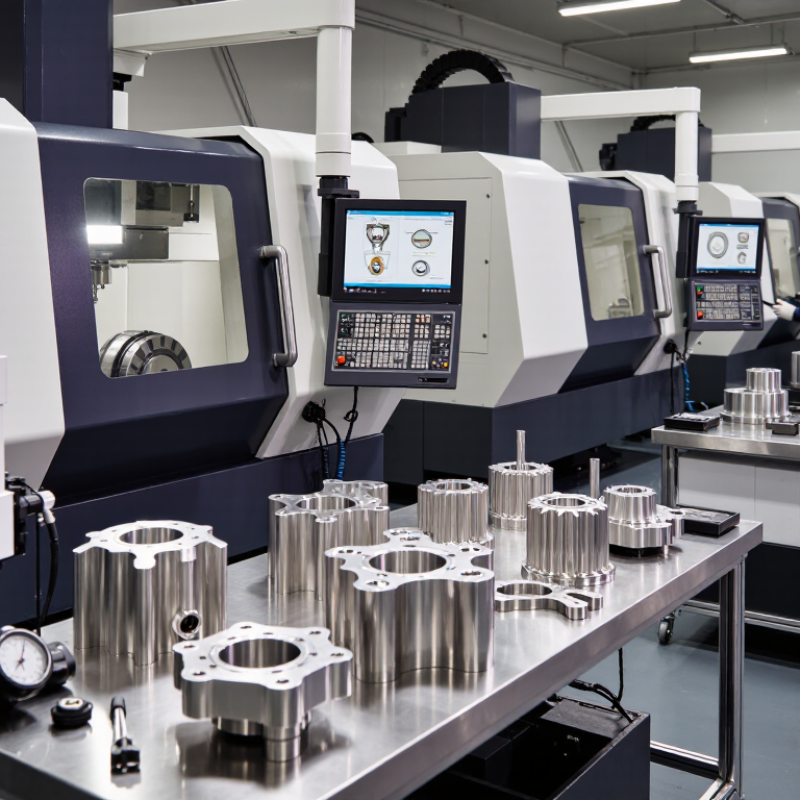
China’s CNC milling parts manufacturers provide practical support for global buyers, from drawings to repeat production. Experienced suppliers review 3D models, material grades, tolerances, and surface requirements before machining. They commonly work with aluminum, stainless steel, brass, engineering plastics, and other industrial materials. Their equipment may include three-, four-, and five-axis milling centers for complex geometries.
Clear communication matters.
A capable manufacturer can produce prototypes, small batches, and larger orders with documented inspection steps. Buyers may receive dimensional reports, material certificates, first-article samples, and photographs of critical features. Coordinate measuring machines help verify holes, flatness, profiles, and positional accuracy. Finishing options can include anodizing, plating, powder coating, polishing, and deburring, depending on the part’s function. Protective packaging also reduces scratches and deformation during international transport.
Not every first sample is perfect. That is normal.
Good suppliers discuss deviations instead of hiding them. They may suggest a larger fillet, a revised tolerance, or a different cutting direction to improve manufacturability. This practical feedback can reduce waste and unexpected costs. Still, buyers should confirm inspection standards, production capacity, lead times, and communication procedures in writing. Some suppliers explain technical details well but respond slowly during revisions. That weakness can affect schedules. Reliable cooperation requires traceable records, realistic promises, and consistent checks from raw material receipt to final packing.
China Top CNC Milling Parts Manufacturers for Global Buyers - What CNC Milling Parts Manufacturers in China Provide
| Service or Product Dimension | Typical Capability Provided | Common Options for Global Buyers | Buyer Considerations |
|---|---|---|---|
| CNC Milling Equipment | 3-axis, 4-axis, and 5-axis machining for prismatic and complex components | Prototype production, low-volume batches, and repeat production | The required number of axes depends on part geometry, accessibility, and setup cost |
| Material Selection | Machining of aluminum, stainless steel, carbon steel, brass, copper, titanium, and engineering plastics | 6061 and 7075 aluminum, 304 and 316 stainless steel, POM, nylon, and PEEK | Material certificates and traceability may be requested for regulated or safety-critical applications |
| Dimensional Tolerance | General machining tolerances commonly around ±0.05 mm; tighter tolerances may be available for suitable features | Standard tolerances, precision fits, geometric tolerances, and inspection reports | Tolerance depends on material, feature size, part design, machine condition, and inspection method |
| Surface Finish | Milled finishes commonly range from approximately Ra 1.6 to 3.2 μm; smoother finishes may require additional processes | As-machined, bead blasted, brushed, polished, anodized, plated, powder coated, and passivated finishes | Color, coating thickness, masking areas, and cosmetic acceptance criteria should be specified in advance |
| Part Size Range | Small precision components through medium-sized structural and machine parts | Small parts under 100 mm, medium parts from 100–500 mm, and larger parts subject to machine travel | Work envelope, weight, clamping method, and material removal volume affect feasibility and price |
| Engineering File Support | Review of 2D drawings, 3D CAD models, tolerances, materials, and finishing requirements | STEP, IGES, Parasolid, SolidWorks files, PDF drawings, and technical specification sheets | A complete drawing with datum references and critical dimensions reduces quotation and production errors |
| Quality Inspection | Calipers, micrometers, height gauges, thread gauges, surface testers, and coordinate measuring equipment | First article inspection, in-process inspection, final inspection, and statistical sampling | Inspection scope should match the critical-to-quality features identified on the drawing |
| Secondary Operations | Deburring, tapping, reaming, heat treatment, surface finishing, laser marking, and assembly coordination | Integrated sourcing from machining through finishing and packaging | Additional processes can affect dimensional change, corrosion resistance, appearance, and lead time |
| Order Quantities | Custom production can support one-off prototypes as well as recurring batch orders | Prototype quantities, pilot runs, small batches, and scheduled repeat orders | Unit pricing generally changes with quantity, setup time, material yield, inspection, and finishing requirements |
| Typical Lead Time | Simple prototypes may take about 5–10 business days; production orders often require 2–6 weeks | Expedited prototyping, standard production, and scheduled blanket orders | The actual schedule depends on quantity, material availability, finishing, inspection, and shipping method |
| Packaging and Export Support | Protective packaging, part identification, commercial documentation, and international shipment coordination | Individual wrapping, partitioned cartons, moisture protection, pallets, and customized labels | Packaging should reflect part fragility, corrosion sensitivity, destination requirements, and transportation conditions |
| Quotation Information | Pricing is usually based on drawings, material, quantity, tolerance, finish, inspection, and delivery terms | Itemized quotations, sample pricing, production pricing, tooling charges, and shipping estimates | Providing accurate CAD files, revision levels, annual demand, and destination helps improve quotation accuracy |
Note: The capabilities and time ranges shown are typical industry guidance for custom CNC milling and should be confirmed against the specific drawing, material, quantity, inspection plan, and delivery requirements.