
Choosing the best Warehouse Wms System in China is not a simple software comparison. It is an operational decision shaped by inventory accuracy, warehouse scale, labor skills, and customer promises.
China’s logistics environment is enormous and highly varied. The China Federation of Logistics and Purchasing regularly reports continued growth in national logistics activity and technology adoption. These reports show why warehouses need stronger visibility, faster processing, and more reliable data connections. A system designed for one automated distribution center may perform poorly in a smaller factory warehouse. The best option depends on actual workflows.
Global research supports this practical view. The MHI Annual Industry Report identifies digital supply chain technologies as a major investment priority for logistics leaders. Gartner research also emphasizes warehouse execution, integration, analytics, and automation as important WMS evaluation areas. IDC China reports frequently highlight cloud adoption and intelligent manufacturing as key drivers in enterprise technology investment. Together, these findings suggest that a capable Warehouse Wms System should manage receiving, put-away, picking, replenishment, cycle counting, and shipping without creating unnecessary complexity.
Local experience matters. Chinese warehouses often require integration with ERP, transportation platforms, barcode devices, and automated equipment. Mandarin support and local implementation teams can reduce downtime. Yet these features do not guarantee success. Some projects fail because inventory data is inaccurate before installation. That detail deserves more attention.
A useful evaluation should examine measurable results, including order accuracy, stock visibility, picking time, system uptime, and training effort. There is no universal winner. The strongest choice is the system that fits the warehouse today and can adapt when volumes, channels, and operating methods change.
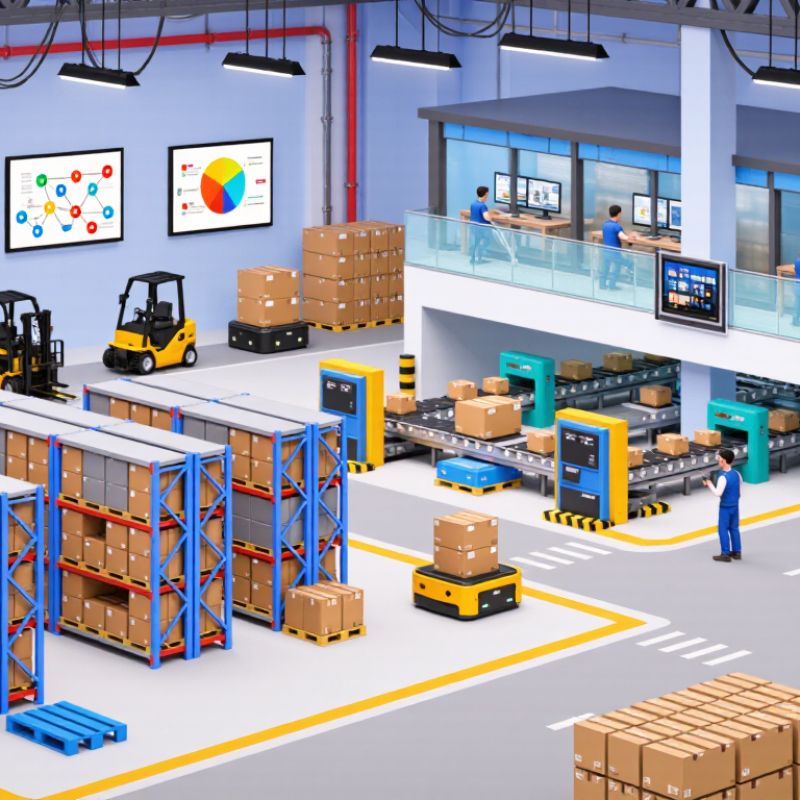
A warehouse WMS system is software that controls daily warehouse operations. It connects receiving, storage, picking, packing, and dispatching in one digital workflow. Instead of relying on paper lists, workers scan goods and locations with handheld devices. The system then updates stock records immediately. In Chinese warehouses, a capable WMS may also support multiple storage zones, Chinese-language workflows, barcode rules, and connections with transport or order systems. The best system depends on warehouse size, product variety, order volume, and integration needs.
A reliable WMS should show where each item is stored and why stock levels change. It can assign suitable locations, create picking tasks, and warn staff about quantity differences. Managers can review accuracy, labor time, delayed orders, and equipment use through clear dashboards. Practical warehouse projects show that implementation matters as much as software features. Poor product data can damage accurate results. It is easy to blame the system too quickly.
Tips: Test the system with real orders before full deployment. Include damaged cartons, partial cases, returns, and urgent shipments. Train workers beside actual shelves, not only in a classroom. Check offline procedures, user permissions, backup plans, and data security. Start with one warehouse zone. Improve the workflow after measuring errors. Fancy screens are not enough. A useful WMS should make work clearer, faster, and easier to verify.
Key operational benchmarks for evaluating a Warehouse Management System
A Warehouse Management System (WMS) controls receiving, put-away, inventory tracking, picking, packing, and shipping. The best solution should support high inventory accuracy, reliable order fulfillment, fast receiving operations, and strong shipment timeliness. The figures shown are commonly used operational benchmark targets and should be adapted to warehouse type, product category, and service requirements.
In Chinese warehouses, a WMS connects receiving, storage, picking, packing, and shipping. It starts when staff scan an incoming carton at the dock. The system checks the purchase order, quantity, and product code. It then suggests a storage location based on size, turnover, and available space. Workers receive tasks on handheld terminals. Clear instructions reduce walking and misplaced stock.
During picking, the WMS groups orders into waves or routes. This matters in warehouses handling many small parcels during shopping festivals. Sensors and barcode scans update inventory after each movement.
Supervisors can view stock levels, delayed tasks, and error rates from a central dashboard. However, data is only useful when workers scan consistently. A rushed rollout can create inaccurate records, even with advanced software. That weakness deserves honest attention.
Tips: Map real warehouse processes before selecting a system. Test receiving, replenishment, picking, and returns with sample orders. Use Chinese product labels and simple screen instructions where appropriate. Train workers beside actual shelves, not only in a classroom. Review exceptions every week. No system is perfect. A practical WMS should support staff, connect with existing equipment, and remain flexible when layouts or order volumes change.
The best China-based WMS solution should make warehouse work visible, measurable, and adaptable. Real-time inventory accuracy is essential when one carton moves through receiving, put-away, picking, packing, and dispatch in minutes. The system should support barcode scanning, RFID, batch control, serial numbers, cycle counting, and location-level stock records. It also needs reliable APIs for ERP, transport, order, and automation systems. MHI’s 2024 Annual Industry Report reported that 43% of supply chain leaders were increasing investment in automation. A WMS without automation readiness may become expensive technical debt.
Speed matters, but control matters more. Strong solutions provide wave planning, task allocation, labor monitoring, exception alerts, and configurable workflows for different warehouses. They should handle Chinese-language operations, local delivery processes, multi-site inventory, and mobile devices used on busy warehouse floors. Cloud deployment can improve scalability, while on-premise options may suit companies with stricter internal controls. Gartner has repeatedly identified composable and interoperable systems as important directions for supply chain technology. Integration should not be treated as an afterthought.
Security deserves practical testing. Ask whether every stock adjustment leaves an audit trail. Check recovery procedures. Test the system during peak orders, not during a quiet demonstration. Zebra’s 2024 Warehousing Vision Study found that many warehouse leaders were accelerating digital investment, including artificial intelligence adoption. Yet intelligent features can still produce poor decisions when master data is incomplete. This is where many projects fail. Clean product data, trained operators, and realistic implementation support often matter more than impressive dashboards.
Comparing warehouse WMS systems in China should begin with warehouse reality, not a feature list. Map receiving, put-away, picking, packing, and returns on paper. Then measure how each system handles them. A strong WMS should support Chinese-language operations, barcode scanning, multiple storage areas, and local business workflows. It should also connect smoothly with ERP, transport, and marketplace systems.
Test the software with real data. Upload 5,000 mixed items, including fragile goods, batch numbers, and different units of measure. Watch the system during a peak-hour picking simulation. Check stock accuracy, task assignment, screen response time, and exception handling. Ask whether supervisors can change rules without developer support. Review audit logs, user permissions, backup procedures, and data-export options. These details reveal more than a polished sales demonstration.
Implementation quality deserves equal attention. Request a clear timeline, training plan, migration method, and support response targets. Calculate the total cost, including scanners, interfaces, customization, upgrades, and internal labor. A low license price may hide expensive integration work. A spreadsheet scorecard helps, but it can still mislead. I would run a limited pilot before signing a long contract. Even then, one weakness may appear later. For example, a system can manage standard picking well but struggle with urgent order changes. Record those gaps honestly, assign owners, and test the fixes again.
| Comparison Dimension | Domestic Enterprise WMS | Global Enterprise WMS | Cloud-Native WMS | 3PL-Focused WMS |
|---|---|---|---|---|
| Best-fit warehouse profile | Chinese manufacturing, retail, wholesale, and e-commerce operations | Multinational companies with standardized processes across multiple countries | Fast-growing businesses that need rapid deployment and flexible scaling | Third-party logistics providers handling multiple customers and billing models |
| Common deployment model | Private cloud, public cloud, or on-premises deployment | Usually private cloud, hosted, or on-premises deployment | Software as a service with browser-based access | Cloud or hosted deployment with customer-level data separation |
| Chinese operational support | Native Chinese user interface, local workflows, and domestic service processes | Chinese language support may require localization and regional implementation resources | Usually available through web and mobile interfaces; verify local support coverage | Chinese-language workflows are commonly required for warehouse operators and clients |
| Inventory control | Lot, serial number, expiration date, location, batch, and quality-status tracking | Advanced multi-site inventory, global item masters, and standardized controls | Real-time inventory visibility with configurable rules and mobile updates | Inventory ownership, client segregation, shared stock, and chargeable activities |
| Order fulfillment | Wave picking, batch picking, zone picking, replenishment, packing, and dispatch | Complex fulfillment orchestration across regions, facilities, and business units | Configurable workflows suitable for standard receiving, picking, and shipping processes | Customer-specific service rules, order priorities, and value-added services |
| Integration capability | ERP, order management, transport, e-commerce, automation, and electronic invoicing interfaces | Strong enterprise integration, but local platforms and interfaces may need additional mapping | API, webhooks, standard connectors, and file-based integration options | Multi-client APIs, billing interfaces, transport links, and customer portals |
| Automation compatibility | Can connect with conveyors, barcode equipment, automated storage, sorting, and robotic systems | Suitable for highly standardized, multi-site automation programs | Suitable for modular automation; confirm device and control-system interfaces | Supports shared automation environments serving multiple customers |
| Implementation complexity | Medium; complexity increases with customization, automation, and multi-site operations | High; requires process harmonization, data governance, and international coordination | Low to medium for standard workflows; higher for complex integrations | Medium to high because customer-specific rules must be modeled and maintained |
| Scalability | Suitable for single-site and multi-site expansion within China | Designed for large organizations and cross-border standardization | Resources and user capacity can generally scale with subscription and infrastructure plans | Designed to add customers, facilities, users, and billing rules without duplicating systems |
| Data and security considerations | Verify access control, audit trails, backup, disaster recovery, and China data-hosting requirements | Requires review of cross-border data transfer, regional hosting, and corporate security policies | Verify tenant isolation, encryption, uptime commitments, backup policy, and exit procedures | Requires strict customer-data isolation, role permissions, auditability, and billing-data protection |
| Typical total-cost drivers | Licensing, implementation, customization, devices, integration, training, and support | Licensing, global rollout, localization, consulting, integration, and long-term support | Subscription, implementation, integration, user volume, transaction volume, and optional modules | Customer onboarding, configuration, transaction volume, billing, portals, and operational support |
| Key selection question | Does the system support local processes without excessive customization? | Can it meet China-specific requirements while preserving global standards? | Are integrations, data controls, and service-level commitments sufficiently clear? | Can it manage different customer contracts, service rules, and operational charges? |
Note: The comparison summarizes commonly available WMS capabilities and evaluation factors in the Chinese market. Actual functions, implementation effort, security controls, and costs should be verified through a requirements specification, workflow demonstration, integration test, and service agreement.
The best WMS in China is not necessarily the system with the longest feature list. It should fit your products, labor model, and growth plan. Start with the warehouse floor. Observe receiving, put-away, picking, packing, cycle counting, and returns. A strong system should support Chinese-language operations, multi-warehouse control, barcode or RFID scanning, and stable integration with ERP, transport, and sales platforms. These details matter more than an impressive demonstration.
The 2024 MHI Annual Industry Report found that 55% of supply-chain professionals expect technology investment to increase within two years. This signals stronger demand for measurable warehouse performance. However, automation alone does not fix poor master data or unclear processes. Your evaluation should test inventory accuracy, order allocation, replenishment alerts, and exception handling using real operational records. Ask vendors to demonstrate peak-season workflows, not prepared sample data.
Total cost deserves equal attention. McKinsey research indicates that warehouse automation can reduce operating costs by roughly 20% to 40% in suitable environments. Results vary widely. A smaller warehouse may gain more from better location rules than expensive robotics. Implementation support, training, API flexibility, cybersecurity, and local service coverage should be scored separately. I would also test failure recovery, because systems rarely behave perfectly during network interruptions. Our own selection process can be imperfect. That is why a limited pilot, with clear success metrics, is safer than a rushed full deployment.
Copyright © 2025 · All Rights Reserved · Franchino Mold & Engineering