
Choosing an Explosion Proof Cctv Camera is not a routine purchasing decision. In refineries, chemical plants, mines, and grain facilities, one weak specification can create a serious blind spot. Heat, dust, corrosive vapors, and pressure changes may challenge ordinary surveillance equipment.
The U.S. Chemical Safety and Hazard Investigation Board has repeatedly linked industrial incidents to overlooked process hazards and inadequate safeguards. NFPA’s Fire Loss in the United States report recorded approximately 1.5 million fires and $21.9 billion in property damage during 2022. These figures do not describe cameras alone. They show why dependable monitoring deserves careful engineering.
IECEx and ATEX frameworks focus on equipment suitability for hazardous areas. Certification should match the site’s gas group, temperature class, zone, and installation method. A shiny stainless-steel housing is not proof of protection.
“Safety is the presence of capacity,” says safety-science expert Sidney Dekker. His observation fits camera selection well. A camera must support operators when visibility, lighting, or access becomes difficult.
Experience matters here. Check the certificate, lens window, infrared performance, ingress rating, network security, and maintenance procedure. Then question the obvious choice. Does the camera remain reliable after months of salt, dust, vibration, and cleaning chemicals?
Seven practical tips will examine these details, from hazardous-area certification to remote monitoring and lifecycle cost. Some choices may still feel imperfect. That is worth admitting. A certified camera can fail when installation, grounding, or maintenance is neglected. The safest decision connects product evidence with real site conditions, documented testing, and competent installation.
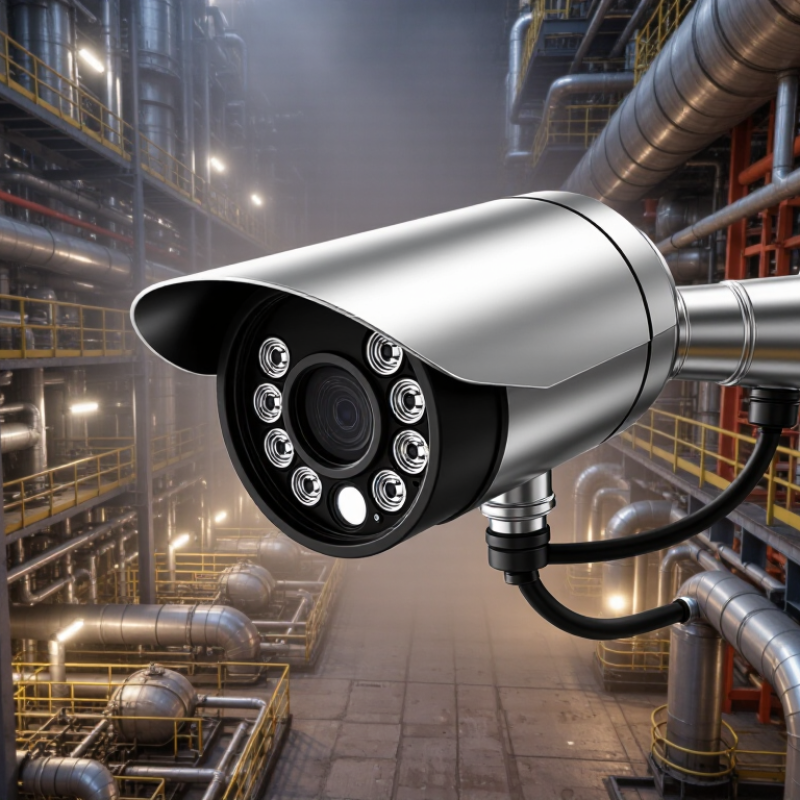
Tip 1: Classify the zone before comparing cameras. ATEX Zone 0 contains explosive gas continuously or for long periods. Zone 1 allows occasional gas release during normal operation. Zone 2 expects gas only briefly or abnormally. The European Commission’s ATEX Guidelines explain these distinctions. A camera rated for Zone 2 cannot automatically serve Zone 0.
Tip 2: Match the gas group and temperature class. IEC 60079-10-1 separates gases into IIA, IIB, and IIC groups. IIC represents the most demanding group, including hydrogen and acetylene. Temperature classes range from T1, with a 450°C maximum surface temperature, to T6, limited to 85°C. Check the actual gas, ignition temperature, and enclosure marking. Guessing is unsafe.
Tip 3: Verify independent certification. IECEx certificates identify equipment protection levels, gas groups, and temperature limits. Read the certificate, not only the product description. HSE recorded 138 worker fatalities in Great Britain during 2023/24, across all industries. That figure is a reminder that paperwork must reflect field conditions.
Tip 4: Inspect the installation environment. Salt spray, vibration, dust, and pressure-washing can damage seals and windows. A camera may pass a laboratory test yet fail beside a vibrating pump. Review cable glands, junction boxes, grounding, and maintenance access. This is where many selection plans become too optimistic.
Tip 1 Choose the enclosure certification before comparing camera features. Ex d enclosures are designed to contain an internal explosion and prevent flame transmission. They suit hazardous areas where ignition risks are significant. Ex e enclosures use increased safety measures, reducing the chance of sparks, high temperatures, and electrical faults. However, Ex e is not interchangeable with Ex d. Check the equipment marking, gas or dust group, temperature class, and certified zone.
Tip 2 Treat IP ratings as a separate requirement. IP66 protects against dust and powerful water jets. IP67 adds temporary immersion protection, which helps during heavy rain, washdown, or accidental flooding. Neither rating confirms explosion protection. A camera may have IP67 protection but still be unsuitable for a hazardous location. That mistake is common.
Tip 3 Inspect the complete installation, not only the camera housing. Certified cable glands, conduit entries, seals, and mounting hardware must match the enclosure approval. Small gaps can undermine protection. Ask for current certificates from the manufacturer or certification body. Confirm that the operating temperature fits the site. Condensation can still appear inside a sealed housing. It deserves attention.
In practice, technicians sometimes select Ex d equipment but overlook cable entry limits. Others trust “waterproof” wording without checking test conditions. A careful review of certification documents, installation drawings, and inspection routines reduces these risks. The safest choice is rarely the camera with the highest rating alone.
7 Tips for Choosing an Explosion Proof CCTV Camera
Match Camera Materials to Corrosion, Temperature, and IK10 Impact Risks
Material selection should begin with the site, not the camera catalogue. In coastal plants, salt mist attacks exposed metal, screws, and cable glands. 316L stainless steel usually provides stronger corrosion resistance than standard stainless steel. However, it is not immune to chemical damage. Check the enclosure, window, fasteners, and mounting brackets together. One weak component can shorten the system’s service life.
Temperature ratings need practical attention. A camera beside a furnace may face radiant heat, not just high ambient air temperature. In cold storage areas, seals can stiffen, while condensation forms during temperature changes. Select certified equipment for the full operating range, including startup conditions. Use suitable sunshields or thermal barriers where necessary. Small details matter.
IK10 impact protection means the enclosure withstands severe mechanical impact under the relevant test standard. It does not guarantee protection against every tool, explosion, or installation mistake. Inspect the housing thickness, viewing window, hinges, and cable entries. A damaged window can undermine confidence quickly. The camera must also carry the correct hazardous-area certification for its intended location and local rules. A common mistake is choosing a strong-looking metal body without checking certification documents. I would question that choice. Performance claims deserve verification through test reports, installation records, and routine inspections.
Tip 1: Verify imaging performance before checking the housing certificate.
A 4K sensor records 3840 × 2160 pixels, or about 8.3 million pixels. That detail helps identify a worker’s helmet or a valve label. However, resolution alone can mislead. Poor lenses, compression, and dirty glass may erase useful detail.
The 2024 Video Surveillance Market report from MarketsandMarkets identifies high-definition imaging and low-light monitoring as major industry priorities. Test the camera at the actual mounting distance. Read a sample image, not only a specification sheet.
Tip 2: Examine WDR and night performance in real conditions.
Wide Dynamic Range should protect highlights near bright lamps while preserving shadows. A camera claiming 120 dB WDR may perform differently from another using the same number. Ask for test scenes with headlights, reflective metal, and deep shade. I have seen impressive daytime footage fail beside a loading-bay light.
Tip 3: Treat IR range as a measured result, not a promise.
The U.S. Department of Energy reports that LED lighting can provide substantial energy savings, yet industrial sites still contain dark corners and uneven illumination. Check infrared coverage across the full scene. White surfaces may look bright, while black equipment disappears. Confirm the minimum illumination rating in lux, image noise, shutter speed, and infrared distance together.
The IEC 62676 video-surveillance standard supports performance-based evaluation, including image quality and testing conditions. A practical trial remains essential. Dust, condensation, protective glass, and heat can reduce sensitivity. Leave room for error. Real sites rarely resemble laboratory charts.
The chart compares representative performance values against practical selection references: 4K resolution means 3840 × 2160 pixels, 120 dB WDR helps preserve detail in high-contrast scenes, a 40 m infrared range supports medium-to-long-distance monitoring, and 0.003 lux indicates strong low-light sensitivity. Always confirm the manufacturer’s test conditions and certification requirements before purchase.
7 Tips for Choosing an Explosion Proof CCTV Camera
Compliance should guide the purchase, not the product photograph. Check the certificate and marking. Match them with the site’s classified zone, gas or dust group, temperature class, and ambient range. A camera approved for one hazardous area may not suit another. Review local regulations with a qualified safety engineer. Do not trust the label alone. Installation details matter just as much. Select certified cable glands, suitable conduit, grounding hardware, and correctly rated junction boxes. Confirm the enclosure’s ingress protection rating for dust, rain, and washdown conditions. Avoid drilling or modifying the housing, because one small change can invalidate the protection. Real sites are rarely tidy. Heat, vibration, salt, and poor cable routing often create problems that specifications overlook.
Networking requirements deserve equal attention. Check whether copper, fiber, or wireless connections fit the area classification and distance. Confirm power delivery, bandwidth, network isolation, user authentication, and time synchronization. A clear image is useless if the video drops during an incident. Calculate storage capacity using the chosen resolution, frame rate, compression, and retention period. Maintenance should be planned before installation. Inspect seals, corrosion, cable glands, viewing windows, and mounting bolts at defined intervals. Clean the lens with approved materials, then test alarms and recording playback. Apply firmware updates through documented change control. Keep inspection records, certificates, and repair history together. I sometimes see teams focus heavily on the camera and neglect the cable entry. That is an expensive lesson. Check it early.
| No. | Selection Area | What to Check | Practical Requirement | Why It Matters |
|---|---|---|---|---|
| 1 | Verify Hazardous-Area Compliance | Confirm that the camera has certification appropriate for the classified location, such as ATEX, IECEx, or another legally recognized hazardous-area approval. | Match the protection concept, gas or dust group, temperature class, equipment protection level, and zone or division classification with the site assessment. | A camera certified for the wrong hazardous environment may create an ignition risk and may not satisfy regulatory or insurance requirements. |
| 2 | Check Enclosure and Environmental Protection | Review the enclosure material, ingress-protection rating, corrosion resistance, operating temperature, humidity range, and impact resistance. | For exposed outdoor locations, an IP66 or higher rating is commonly selected; IP67 may be required where temporary water immersion is possible. Confirm suitability for salt, chemicals, dust, and washdown conditions. | Ingress, corrosion, or temperature damage can reduce image quality, shorten service life, and compromise enclosure integrity. |
| 3 | Evaluate Image and Low-Light Performance | Assess resolution, lens focal length, field of view, dynamic range, infrared performance, minimum illumination, and backlight handling. | Select the lens according to the distance and target size. Use wide dynamic range for entrances or areas with strong contrast, and verify that infrared illumination does not cause reflections from nearby surfaces. | A compliant enclosure cannot compensate for unclear identification images, glare, blind spots, or inadequate night coverage. |
| 4 | Plan Safe and Correct Installation | Check mounting hardware, cable glands, conduit, junction boxes, grounding, access clearance, and installation instructions. | Use only approved accessories that preserve the certified protection method. Install cable entries correctly, prevent mechanical stress on cables, and avoid drilling or modifying the certified enclosure. | Incorrect glands, open cable entries, poor bonding, or unauthorized modifications can invalidate certification and reduce protection against ignition or water ingress. |
| 5 | Confirm Power and Network Compatibility | Verify voltage, power consumption, PoE requirements, network speed, cable category, bandwidth, cybersecurity features, and recording compatibility. | Standard copper Ethernet runs are generally limited to about 100 m per segment. For longer distances, use an approved fiber or industrial network design. Calculate bandwidth for resolution, frame rate, compression, and retention requirements. | Insufficient power or bandwidth can cause intermittent video, camera resets, packet loss, and gaps in recorded evidence. |
| 6 | Review Maintenance and Inspection Needs | Determine cleaning frequency, inspection procedures, spare-part availability, firmware policy, calibration needs, and safe access requirements. | Establish a documented inspection schedule. Check enclosure covers, seals, cable glands, corrosion, lens cleanliness, grounding, image quality, and alarm functions without opening equipment in an unsafe atmosphere. | Preventive maintenance helps detect seal degradation, corrosion, blocked infrared windows, and network faults before they cause surveillance failure. |
| 7 | Check Documentation, Lifecycle, and Total Cost | Request certificates, technical drawings, operating limits, installation manuals, test records, warranty terms, firmware support information, and replacement procedures. | Compare purchase price with approved installation materials, hazardous-area labor, network upgrades, inspections, energy use, storage, and future replacement costs. | Complete documentation supports audits, safe maintenance, system expansion, and long-term availability of critical surveillance equipment. |
Important: Final camera selection and installation should be reviewed against the applicable local regulations, hazardous-area classification, site risk assessment, and the equipment certification documents.
Copyright © 2025 · All Rights Reserved · Franchino Mold & Engineering