2026 Top Tool and Die Trends for Global Buyers?
The tool and die industry is evolving rapidly. As of 2023, the global market size for tool and die fabrication has reached approximately $20 billion. This growth is driven by advancements in technology and increasing demand across sectors such as automotive and aerospace. Industry reports highlight that automation and digital manufacturing are reshaping how these tools are designed and produced.
Despite these advancements, challenges remain. Many companies struggle to keep pace with technological shifts while maintaining quality and precision. The skills gap in the workforce also poses a significant hurdle. According to a 2022 study, nearly 45% of tool and die manufacturers reported difficulties in finding qualified employees. These trends emphasize the need for strategic adaptation to remain competitive.
Looking ahead to 2026, global buyers must be aware of these trends. Innovations in 3D printing and computer numerical control (CNC) machining will play a crucial role. Staying updated and responsive to the changing landscape is vital for success in the tool and die sector. Adapting to these advancements requires ongoing investment in both technology and workforce development.

Emerging Technologies Impacting Tool and Die Manufacturing in 2026
The tool and die manufacturing sector is experiencing dramatic shifts driven by emerging technologies. By 2026, automation will significantly alter production processes. Reports suggest that 40% of manufacturers will adopt advanced robotics. These robots enhance precision and reduce labor costs. However, the initial investment can be a barrier for smaller firms.
Additive manufacturing is another key trend. Industry forecasts indicate that 30% of tooling companies will integrate 3D printing by 2026. This approach allows for rapid prototyping and reduces material waste. Yet, some engineers worry about the durability of 3D-printed components. Balancing speed and quality remains a challenge.
Data analytics is transforming decision-making processes. By leveraging big data, manufacturers can optimize their production techniques. Research shows that companies using analytics report a 15% increase in efficiency. However, the need for skilled workers to interpret this data is a concern. Upskilling the workforce is crucial to fully harness these technologies.
Global Market Trends Influencing Tool and Die Design and Innovation
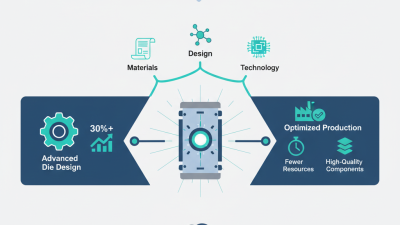
The tool and die industry is witnessing significant changes in design and innovation. Several global market trends are shaping these developments. One prominent trend is the integration of advanced materials. Lightweight alloys and composite materials are gaining popularity. They enhance durability and reduce production costs. This shift requires engineers to rethink traditional designs and processes.
Sustainability is another critical factor. Environmental concerns drive demand for eco-friendly practices. Companies must adopt energy-efficient methods and waste reduction strategies. Not all manufacturers are ready to invest in these changes. Resistance to shift can hinder progress and innovation. Collaboration among industry players may offer solutions to these challenges.
Digital transformation is also impacting tool and die designs. The adoption of AI and 3D printing is revolutionizing production methods. These technologies allow for quicker iterations and improved precision. However, the fast pace of technological advancement poses challenges for many. Companies must continually update their skills and knowledge. The gap between early adopters and laggards is widening, creating a divide in industry standards.
Key Players and Partnerships Shaping the Tool and Die Industry in 2026
The tool and die industry is witnessing a shift in partnerships that are reshaping its future. Collaborations between manufacturers and technology providers reveal a trend toward automation and precision. These partnerships are essential as businesses seek to enhance efficiency while minimizing production costs. Key players are focusing on integrating advanced technologies into their processes. This helps firms stay competitive in a fast-evolving market.
Tip: Embrace technology to optimize your production line. Invest in training employees to adapt to new tools.
Innovative alliances are also emerging within supply chains. Companies are teaming up with material scientists to explore sustainable options. These collaborations not only enhance product performance but also address environmental concerns. It's become necessary to rethink traditional approaches amid growing sustainability demands.
Tip: Assess your partnerships regularly to ensure they align with your sustainability goals. Prioritize collaborations that drive innovation.
Future Skills and Workforce Development for Tool and Die Professionals
As the tool and die industry evolves, future skills become essential. Professionals need to adapt to new technologies and methodologies. Automation and digitalization are reshaping traditional roles. Workers will increasingly rely on advanced tools. Understanding how to operate and maintain these tools is crucial.
Training programs must focus on both technical and soft skills. Critical thinking and problem-solving will be vital as challenges arise. Communication within diverse teams will enhance project success. Apprenticeships can provide real-world experience, but they require updates to stay relevant. Stagnation in learning can hinder growth.
The landscape is changing rapidly. Skills that were valuable yesterday may not suffice tomorrow. Continuous education and adaptability will define successful professionals. Investing in learning opportunities can prevent obsolescence. Industry collaboration can help shape the future workforce. Balancing hands-on experience with theoretical knowledge is necessary for long-term success.